The Card Game
A physical deck that turns the Six-Animal Model into a shared language for meetings. Each person on a team holds the cards for their animal role and plays them to make group actions explicit — calling a vote, flagging a risk, asking for the floor, or celebrating a win. The result is calmer, fairer, faster group work.
What's in the deck
The full set is 128 cards for a six-person team, printed on standard 63.5 × 88.9 mm playing-card stock. Every card carries the Self-Determination Theory need it serves — Competence, Relatedness, or Agency — so play reinforces the theory.
6 Role cards
One per animal. Defines who you are at the table and the need you protect.
18 Action cards
Three per animal — the role-specific powers you can play.
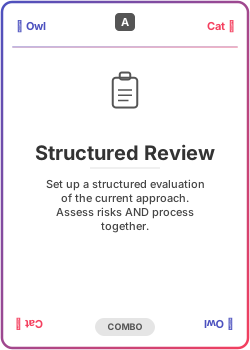
6 Combo cards
Played when two compatible roles collaborate on a move.
18 Voting cards
Agree, Disagree, Abstain — one set each for democratic decisions.
48 Planning Poker
Six sets of 0–100 for fast, bias-free effort estimation.
16 Communication
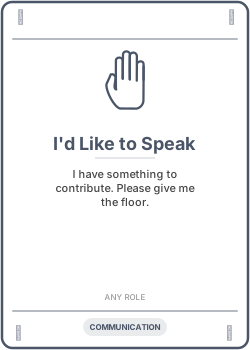
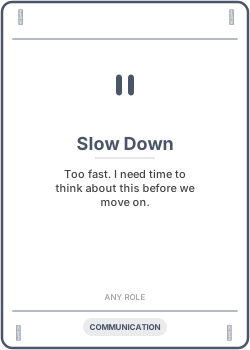
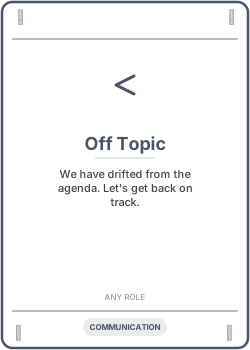
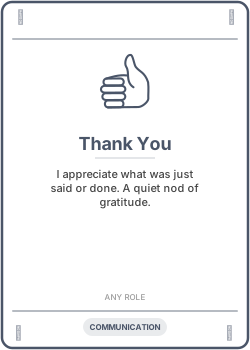
Quiet signal cards: clarify, speak, slow down, park it, thank you.
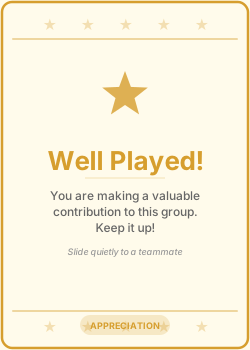
6 Appreciation
Slide one to a teammate to acknowledge a valuable contribution.
10 Supervisor
A separate facilitator deck for nudging the group from the side.
The six roles
Each player picks up the deck for their animal. The role card sets the tone; the action cards are their toolkit.
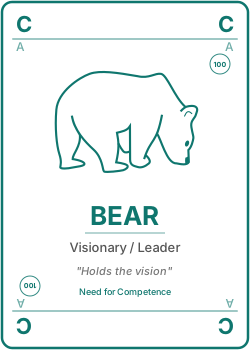
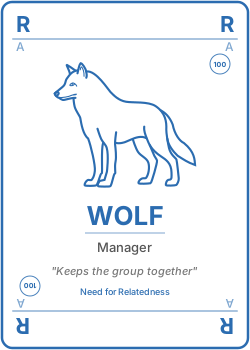
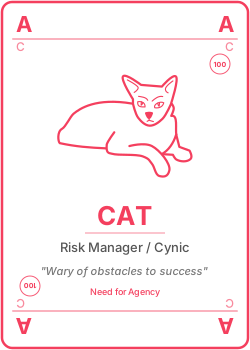
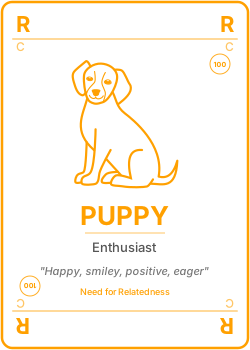
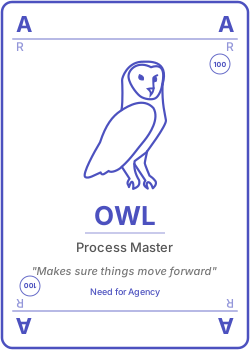
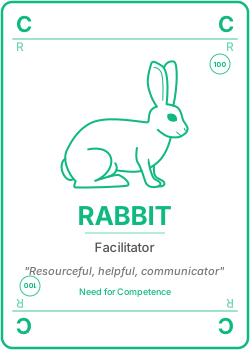
The role cards are free to print as fold-up standees — see below.
Why make the actions explicit?
In most meetings the important moves stay implicit. Someone quietly disagrees, someone wishes they could redirect, someone holds back a concern. The card makes the move visible, named, and legitimate — so it actually happens.
It gives quiet people permission
Playing an “I'd Like to Speak” card is easier than interrupting. The deck levels the floor so the loudest voice doesn't win by default.
It separates the role from the person
A Cat playing “Risk Alert” isn't “being negative” — they're doing their job. Criticism lands on the card, not the colleague.
It names the move so the group can respond
“Back to Vision”, “Scope Creep!”, “Take a Break” — everyone instantly knows what was asked and what happens next. No meta-debate about whether it's allowed.
It builds the habit
After a few sessions the cards come off the table but the moves remain. Teams keep saying “that's a Cat point” long after the deck is in the drawer.
A few of the action cards
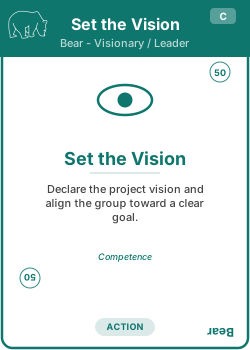
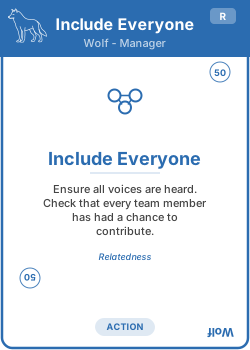
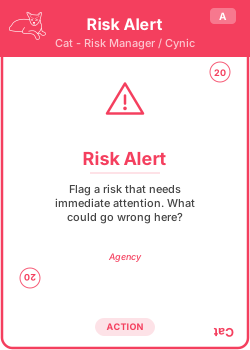
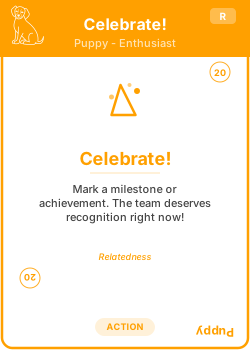
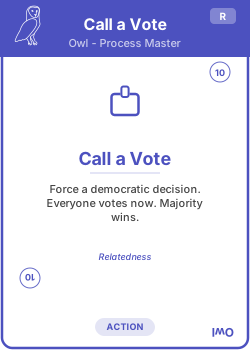
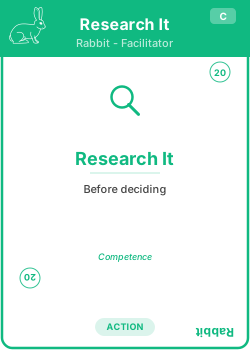
Communication, appreciation, and combo cards work the same way — small explicit signals instead of unspoken tension.
Voting with cards
The deck turns “let's take a quick vote” into a deliberate, bias-aware ritual. The Owl's Call a Vote action opens it; how you reveal the cards changes what kind of vote it is. Pick the mode to match the stakes.
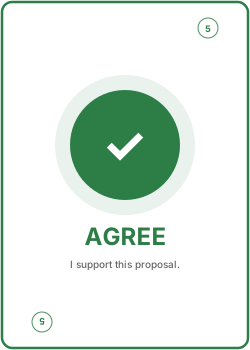
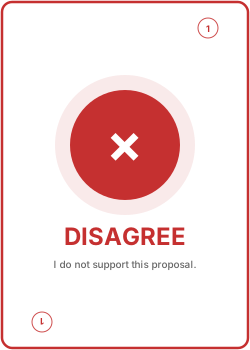
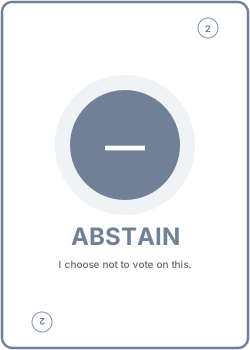
Open voting
Everyone plays their Agree / Disagree / Abstain card face-up, at the same time. Fast and transparent — you see not just the result but who holds which view, so the discussion can go straight to the people who disagree. Best for low-stakes, high-trust decisions where alignment matters more than anonymity.
Commitment voting
Each person chooses a card and places it face-down; on a count of three, everyone flips together. Because no one sees the room before committing, it kills bandwagoning and the “wait for the boss” effect. Use it whenever a senior or dominant voice might otherwise anchor everyone else.
Blind voting
Votes are cast secretly and anonymously — cards passed face-down to the Owl, or dropped into a pile and shuffled. Only the tally is shown, never who voted what. This protects psychological safety on sensitive or personal topics and surfaces honest dissent the room would otherwise suppress.
Planning Poker
The same reveal-together principle, applied to estimation. When the team needs to size a task, everyone selects a Planning Poker value (0, 1, 2, 5, 10, 20, 50, 100) and reveals simultaneously. Outliers explain their thinking, then the team re-estimates. Simultaneous reveal stops the first number spoken from anchoring everyone else — you get genuinely independent judgements before discussion.
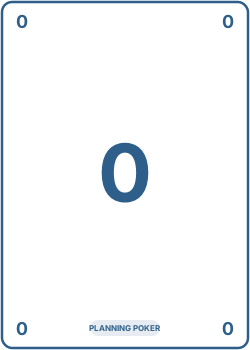
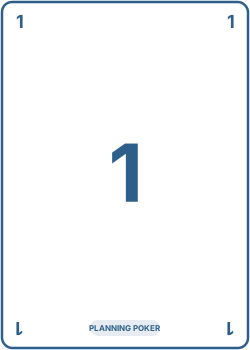
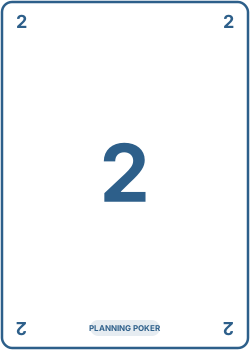
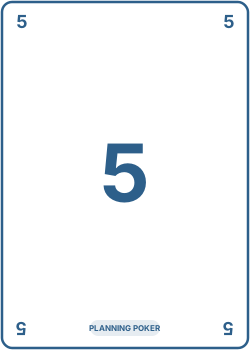
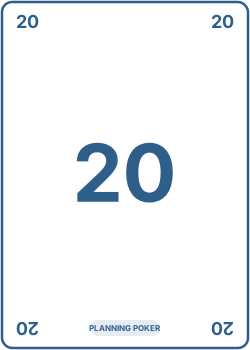
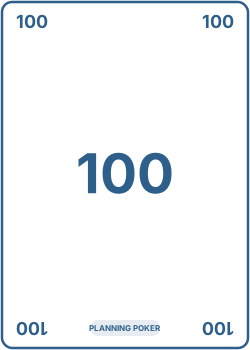
A 0 means “already done / trivial”; a 100 means “too big — break it down first”. The gaps between values are deliberate, so the team argues about the right thing: relative size, not false precision.
Free: print your own role cards
The six role cards are free to print at home — the rest of the deck is best on the good stock (see below). The free sheet is laid out as fold-up table standees: front and back are joined at the top of the card, so one fold makes a double-sided card and the footers fold under to make it stand. Two pages, three cards each, A4 or US Letter.
How the fold works
  footer            ┐
  ── fold ──        │ folds under → foot
  card FRONT  ×3    │ (printed upside-down)
  ── fold ──        ┤ ← top of the card
  card BACK   ×3    │
  ── fold ──        │
  footer            ┘ folds under → foot
Print at 100% scale, cut the three cards apart, fold on the lines, and stand one in front of each player.
Getting the full deck
The complete 128-card game is a deliberately small-run product, so it's sold print-on-demand — no inventory, no stock risk, and the cards come on proper playing-card stock that holds up to real use. The free role cards are the taster; the printed deck is the one you'll want on the table.
Role cards at home
The six fold-up role standees above — enough to run a session and see the model in action. The best way to try it before buying the full deck.
Print-on-Demand deck
The full game, professionally printed and boxed by a print-on-demand partner (e.g. The Game Crafter / MakePlayingCards). They print and ship per order — no inventory, no stock risk, and it scales from one deck to fifty with nothing to manage on our side.
Workshop & consultation bundle
The highest-value channel: decks come with a facilitated session for a team or class. The deck is the takeaway, the facilitation is the product — which carries the margin and turns a low-volume item into a reason to book.
Want a printed deck, a classroom set, or a facilitated session built around the cards? Get in touch and we'll send you the print-on-demand link or arrange a workshop.
Bring the model to the table
Find your role first, then deal everyone in.